Source Gas Freestanding Deep Fryer for Beverages, Pet Food, and Chips
Compare 30 Gas Freestanding Deep Fryer options from Chinese manufacturers. Buyers can evaluate electric and gas models with capacities ranging from 14L to 36L for applications including beverage, pet food, and chip production.
Key considerations
Products List

Commercial Deep Fried Food Machine Electric Deep Fryer Gas Deep Fryer
$3799.00 - $4999.00
MOQ: 1 Pieces


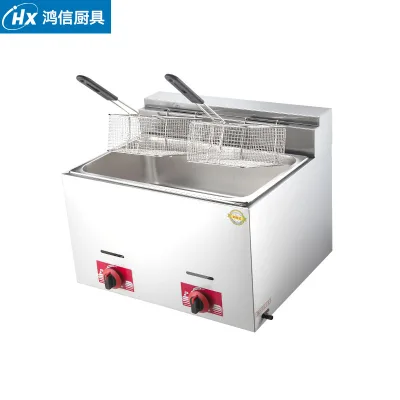


Freestanding 3 Burner 90000BTU Gas Deep Fryer GF90
$465.00 - $494.00
MOQ: 10 Pieces
Guangzhou Rebenet Catering Equipment Manufacturing Co., Ltd.


Comprehensive Sourcing Guide
Strategic Sourcing Guide for Gas Freestanding Deep Fryers
Understanding the Core Technology and Operational Scope
When evaluating gas freestanding deep fryers for commercial or industrial procurement, buyers must first distinguish between the fundamental operational mechanisms that define these units. The supplied product data indicates a distinct split in power sources, with specific listings confirming "Gas" as a primary fuel type alongside "Electric" alternatives. This distinction is critical because the selection of a gas-powered unit directly influences kitchen infrastructure requirements, including ventilation, gas line pressure, and fuel storage safety. The observed product attributes highlight that these machines are designed for high-volume applications, with specific models noted for processing "Chicken Fried" and "Chip Fried" items.
The operational capacity of these units varies significantly based on the intended application. Data points reveal a range of capacities, from compact units with a "14L" volume to larger systems capable of handling "26-36L" batches. This variance suggests that the market offers solutions for both countertop environments and heavy-duty industrial lines. The "Automatic Grade" attribute further complicates the selection process, as the inventory includes "Manual," "Semi-Automatic," and "Automatic" configurations. A buyer seeking a gas freestanding unit must determine if they require a fully automated system that manages oil filtration and temperature cycles independently, or if a semi-automatic model with manual basket lifting suffices for their specific workflow. The "Power Source" being "Gas" implies a reliance on "LPG or Natural Gas" as the fuel input, a detail that must be verified against the specific gas infrastructure available at the installation site.
Technical Specifications and Performance Metrics
Technical due diligence is paramount when sourcing gas deep fryers, as the physical dimensions and thermal capabilities dictate integration feasibility. The provided specifications list a wide array of machine sizes, ranging from compact "Counter Top" units with dimensions like "390X670X635mm" to larger industrial models measuring "11007101000mm." The "Machine Size" and "Package Size" data, such as "4907951150mm," are essential for logistics planning, ensuring the equipment can be transported through standard doorways and installed within the designated kitchen footprint.
Temperature control is another critical technical parameter. The observed data indicates a maximum operating temperature range of "0-400" degrees, a specification that allows for versatile cooking methods from gentle frying to high-heat searing. However, buyers must verify the specific temperature stability and recovery rates of the gas burners, as gas units can sometimes experience fluctuation during high-load periods compared to electric counterparts. The "Power" specification for gas units is often expressed in terms of fuel consumption or heat output, with one observed metric listing "10.8tu/Hr," which likely refers to thermal output or fuel usage rates. This figure is distinct from the "24kw" or "18kw" ratings seen in electric models, necessitating a clear understanding of the unit's energy efficiency and operating cost profile.
Furthermore, the construction material is a vital safety and durability factor. The data consistently points to "Stainless Steel" and "SUS304" as the primary materials used in construction. SUS304 is a standard grade of stainless steel known for its corrosion resistance and hygiene, making it suitable for food processing environments. The "Weight" of these units also varies, with some models weighing as little as "14kg" while others reach "350kg." This weight difference often correlates with the size of the oil tank and the robustness of the frame, influencing the need for reinforced flooring or specialized lifting equipment during installation.
Compliance, Certification, and Safety Standards
Navigating the regulatory landscape for commercial kitchen equipment requires rigorous verification of certifications and safety standards. The supplied product facts explicitly mention "CE" certification, which is a mandatory conformity mark for products sold within the European Economic Area. This certification indicates that the manufacturer claims compliance with health, safety, and environmental protection standards for products sold within the EU. However, the presence of "CE" on a listing does not automatically guarantee compliance with local regulations in other regions, such as the NSF standards in North America or specific national fire codes.
Safety features are equally critical in gas equipment. One observed product attribute highlights "with Flameout Protection," a vital safety mechanism designed to shut off the gas supply automatically if the flame is extinguished, preventing gas leaks and potential explosions. Buyers must confirm that this feature is standard across all gas models or if it is an optional upgrade. The "prod_standard" field notes "Standard Specifications or Customized," suggesting that while baseline safety features exist, specific compliance requirements may need to be negotiated during the customization phase.
Additionally, the "Certification" field contains a mixed entry of "ISOCustomized:Non-Customized," which requires clarification. This likely refers to ISO standards or a specific certification body, but the phrasing is ambiguous. Procurement teams should not assume ISO compliance based on this text alone. Instead, buyers must request valid certification documents from the supplier to verify that the gas fryer meets the specific safety and quality management standards required by their local jurisdiction. The "prod_origin" is listed as "China" and "Guangdong," which are major manufacturing hubs, but the origin location does not dictate the quality of the certification; the actual testing reports and third-party validation are what matter.
Cost Drivers and Economic Considerations
The economic evaluation of gas freestanding deep fryers involves analyzing the interplay between initial capital expenditure, operational efficiency, and minimum order quantities (MOQ). The observed price range for these products spans from "20" to "29800" USD, a vast disparity that reflects differences in capacity, automation level, and build quality. A unit priced at the lower end of this spectrum is likely a manual, countertop model with a smaller oil capacity, whereas the higher-priced units represent industrial-grade, fully automatic systems with advanced safety features and larger output capacities.
MOQ constraints also play a significant role in the total cost of ownership. The data indicates an MOQ range of "1-100," with specific listings showing an MOQ of "5 Set" for certain models. For small businesses or startups, an MOQ of 5 sets may present a barrier, forcing them to either find a supplier with a lower threshold or share the order with other buyers. Conversely, large chains may benefit from the lower per-unit costs associated with higher volume orders. The "prod_packing" details, such as "Wooden Case" or "Carton with Plywood Case," also impact shipping costs. Heavy wooden packaging is necessary for protecting large, heavy units during international transit but adds significant weight and volume to the shipment, increasing freight charges.
Fuel costs are a hidden but significant driver in the long-term economics of gas fryers. While gas is often cheaper than electricity in many commercial markets, the efficiency of the burner and the insulation of the oil tank determine the actual cost per batch. The "10.8tu/Hr" fuel consumption metric suggests that buyers should calculate the hourly fuel cost based on local gas rates to determine the true operating expense. Additionally, the "Weight" and "Size" of the unit influence installation costs, as heavier units may require specialized rigging or structural reinforcement, adding to the initial project budget.
Typical Applications and Process Integration
The versatility of gas freestanding deep fryers is evident in the diverse applications listed in the product data. These units are explicitly designed for "Beverage" and "Pet Food" production lines, as well as specific food items like "Fried French Fries or Meat," "Chips," and "Donut." This range suggests that the equipment is not limited to a single food category but can be adapted for various frying processes. The "Application" field further specifies "Chips" and "Donut," indicating that the temperature control and oil circulation systems are capable of handling delicate items that require precise thermal management.
The "User" attribute, which lists "Fried French Fries or Meat," highlights the robustness required for high-volume, high-fat cooking. Gas fryers are particularly favored in these scenarios due to their rapid heat recovery capabilities, which are essential when frying large batches of food that cause significant temperature drops in the oil. The "Automatic Grade" of "Semi-Automatic" or "Automatic" allows for integration into larger production lines, where the fryer can be synchronized with upstream washing or breading machines and downstream cooling or packaging units.
For applications involving "Chicken Fried" and "Chip Fried," the "Basket" configuration is a key consideration. Some models are listed with "2 Baskets," which allows for continuous operation where one basket is frying while the other is being lifted and drained. This dual-basket system is crucial for maintaining throughput in busy commercial kitchens. The "Capacity" of "14L" or "26-36L" determines the batch size, and buyers must align this with their expected order volume to avoid bottlenecks. The "Processing Material" being "Natural Ingredients, Agronomic Products, Animal Raw Materials" confirms that these units are suitable for a wide range of raw food inputs, from vegetables to meats, provided the oil management system is adequate.
Supplier Evaluation and Quality Assurance
Evaluating suppliers for gas freestanding deep fryers requires a multi-faceted approach that goes beyond the basic product listing. The "prod_origin" of "China" and "Guangdong" identifies a specific manufacturing region known for high-volume appliance production. While this region offers competitive pricing, it also necessitates rigorous quality control to ensure consistency and safety. Buyers should verify the "Condition" of the product, which is listed as "New," but should also request detailed information regarding the manufacturing process, component sourcing, and assembly standards.
The "Customization" attribute, marked as "Available" and "Customized," indicates that suppliers are willing to tailor units to specific requirements. This is a significant advantage for buyers with unique space constraints or specific operational needs. However, customization introduces complexity in quality assurance. Buyers must ensure that any custom modifications do not compromise the structural integrity or safety features of the unit. The "prod_standard" of "Standard Specifications or Customized" suggests that while baseline standards exist, custom orders may deviate from these norms, requiring additional inspection protocols.
Quality control should extend to the packaging and shipping process. The "prod_packing" options, including "Wooden Package" and "Carton with Plywood Case," are designed to protect the unit during transit. Buyers should verify that the packaging meets international shipping standards to prevent damage. Furthermore, the "Weight" and "Package Size" data must be cross-referenced with the supplier's shipping capabilities to ensure that the logistics chain can handle the specific dimensions and weight of the units.
Long-Term Procurement and Maintenance Planning
Long-term procurement considerations for gas freestanding deep fryers involve planning for maintenance, spare parts availability, and lifecycle management. The "Condition" being "New" is a starting point, but the durability of the "SUS304" stainless steel construction and the reliability of the gas burner system will determine the unit's lifespan. Buyers should inquire about the availability of replacement parts, such as burners, thermostats, and baskets, to minimize downtime during repairs.
The "Feature" of "Flameout Protection" is a critical safety component that requires periodic testing to ensure it remains functional. Over time, sensors and valves may degrade, and buyers should establish a maintenance schedule that includes regular inspections of these safety systems. The "Power" and "Temperature" specifications also suggest that the unit will undergo significant thermal cycling, which can lead to wear and tear on seals and gaskets.
Finally, the "MOQ" and "Lead Time" (though not explicitly detailed in the provided facts, implied by the "prod_packing" and "prod_origin") are factors that affect inventory management. Buyers should plan their procurement cycles to align with the supplier's production capacity and shipping schedules. The "Standard Specifications or Customized" nature of the product means that lead times may vary significantly between standard and custom orders. Establishing a clear communication channel with the supplier regarding production timelines and delivery expectations is essential for maintaining operational continuity. By carefully evaluating these long-term factors, buyers can ensure that their investment in gas freestanding deep fryers delivers sustained value and reliability.
FAQs
What power sources are available for gas freestanding deep fryers?
Gas freestanding deep fryers primarily use LPG or Natural Gas as their fuel source. Some models in the market also offer electric power options, but gas units rely on specific fuel inputs for operation.
Which certifications are typically found on these industrial machines?
Many units carry CE certification, indicating compliance with European safety standards. Buyers should verify specific documentation as some listings show mixed or ambiguous certification statuses like ISO variations.
How does the automatic grade affect the operation of these fryers?
The automatic grade ranges from manual to fully automatic configurations. Semi-automatic models often require manual basket lifting, while automatic units manage oil filtration and temperature cycles independently for higher throughput.
What is the typical capacity range for gas deep fryer oil tanks?
Oil tank capacities vary significantly, ranging from compact 14L units to larger systems holding 26-36L. The specific capacity depends on whether the unit is designed for countertop use or heavy industrial lines.
Can these fryers be customized for specific production needs?
Yes, customization is available for standard specifications or tailored requirements. Buyers can request specific dimensions, power ratings, or packaging options like wooden cases to fit their unique operational workflows.
What materials are used to construct the main body of these fryers?
The main construction material is typically Stainless Steel or SUS304 grade steel. This material ensures corrosion resistance and hygiene, which are essential for food processing environments involving meat and chips.
What safety features are included in gas-powered frying units?
Key safety features include flameout protection to automatically shut off gas if the flame extinguishes. Buyers must confirm if this feature is standard or an optional upgrade on specific models.